Behind the Book: Magic Elizabeth
As a daughter of Norma Kassirer, I cannot express how thrilled I am that Magic Elizabeth will once again be back in print come October 6th, 2026, thanks to The Collective Book Studio’s belief in...

I am a Minnesotan through and through, and this moment feels deeply personal.
Recently, Publishers Weekly shared how publishers across Minnesota and beyond are responding to the recent violence and immigration enforcement actions by focusing on what we do best—getting books and culturally responsive resources into the hands of children and families who need them most.
As publishers, avid readers, and book lovers, we spend our days championing empathy, safety, belonging, and equality. But in our current political landscape, those values cannot live only on the page. The principles we print must also guide how we show up in the real world.
We are donating books to Minnesota and actively working with organizations like AmazeWorks, We Are Stronger Than Censorship, My Very Own Bed, Red Balloon Bookshop, and Barton Elementary School to support children and families who are directly impacted by ICE.
Recently, there has been a renewed interest in Phillip D. Cortez’s books, I’ll Be the Moon and Seré La Luna. It’s a reminder that many people are trying to better understand the immigrant experience—the difficult journeys, the hard choices, and the hope for something safer and more stable.
For me, this is about how we are all stepping up during this time. I encourage other publishers, especially those with Spanish-language titles, to join me in donating to the organizations listed above. I have a couple of Spanish-language titles, but it’s not enough. If I can help connect others to Minnesotans who are in need of support, that feels like a meaningful step forward.
This moment asks something of all of us. As parents, as publishers, as neighbors, we must show courage and compassion right now—and show up. Change rarely begins with sweeping gestures. It begins with small, steady choices.

I’m grateful to share Phillip’s blog below. His words spark action, reflection, and generosity.
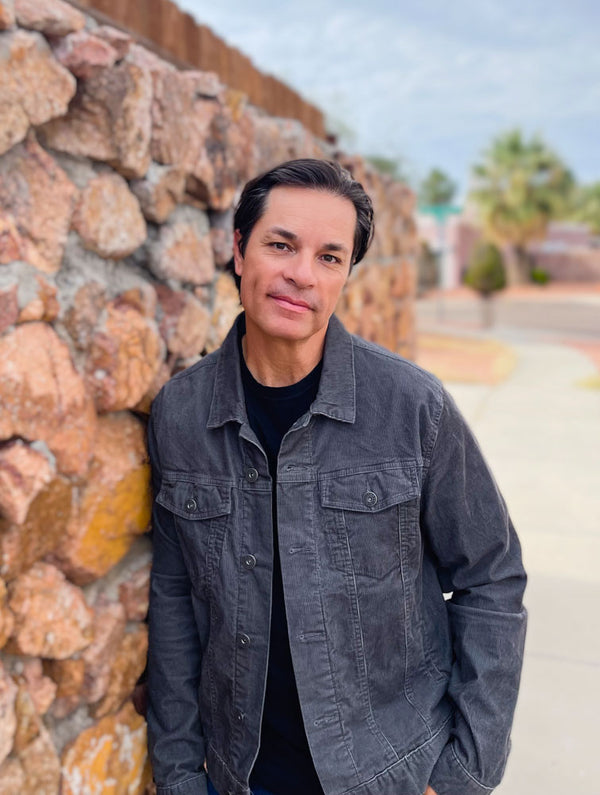
In the world of children’s literature, we often talk about "mirrors and windows." We want books to be windows into other lives and mirrors that reflect children’s experiences. When I wrote I’ll Be the Moon, I created a window—I wanted readers to see the courage of a young migrant girl guided by the moon, traveling toward the "promise" of a safe American reunion with her father.

Recently, its mirror has shattered.
Looking at the landscape in Minnesota, I feel a heavy, suffocating silence. I’m struggling with the disconnect: My platform, The Happy Manifesto, is built on seeking light. But how can I talk about the "joy of storytelling" when reality feels so starkly different from the hope I put on the page?
My breaking point was seeing the images of a five-year-old boy in Minnesota: In a moment that felt like a glitch in the American promise, this child—the same age as the protagonist of my book—was seen in handcuffs.
My character, a child of fiction, was braving deserts and darkness because she believed that reaching this soil meant safety. She was looking up at the moon for guidance. In real life, a child was looking down at the pavement, held by the very government that should have been his shield.

The fiction I crafted had collided with the friction of our reality, forcing me to ask a painful question: What does the American promise mean if it doesn't apply to a five-year-old?
As writers, we often worry about "risking our status" by speaking out. We are told to stay in our lane, to keep the prose pretty and the politics private. But silence is a luxury that the children in our stories and on our streets cannot afford. If I am willing to profit from a story about a child’s struggle for freedom, I must be willing to stand up for that child’s reality when it is under threat.
I’ve realized that my "status" as an author is meaningless if it isn't used to defend the values I write about. Silence in the face of state-sanctioned violence isn't neutrality—it is complicity.
I see thousands of Americans rising up right now, demanding better from our leadership. I don't see these protests as a disruption; I see them as the seeds of hope for a more fruitful version of freedom. They are the gardeners tending to an American promise that has been left to wither for too long. They are the ones proving that the heart of this country resides in its people’s refusal to accept the unacceptable.
Yes, we are living through a "crazy time". But it is also a clarifying time. It is a time for drawing lines in the sand.
To my readers and fellow creators: Our stories do not exist in a vacuum. We have a responsibility to ensure that the world we leave behind is at least as kind as the worlds we build in our books. True happiness—the kind I try to manifest every day—is not found in ignoring the darkness. It is found in the integrity of standing together to be the light.

In my book, the moon finds a way to shine through the clouds. In real life, that’s our job. We must be the light we wish to see. We must be the seeds of the change we’ve been promised.